
Mianwali (Muhammad Iqbal Awan) Islam teaches humanity how to live a balanced, disciplined, and honorable life. It gives primary importance to consultation, mutual cooperation, and faithfulness in the light of the Qur’an and Sunnah. Education is regarded as the first step toward success; without knowledge, it is difficult to achieve meaningful and lasting results. Islam also emphasizes remaining vigilant about current events, promoting unity among people, and making decisions with wisdom and foresight. History shows that a single misstep can damage the integrity of nations, whereas unity and discipline strengthen them.
Iran is considered an important and influential power in the Middle East. Its political system has been based on a theocratic framework since the 1979 Islamic Revolution. Iran and Israel have remained in confrontation for decades, each viewing the other as a strategic adversary. Iran has consistently supported the Palestinian cause in the ongoing Israel-Palestine conflict.
The Israel-Palestine conflict is a complex and long-standing issue that has repeatedly been brought to the negotiating table, with regional and global powers attempting mediation both directly and indirectly. Over time, relations among Israel, the United States, and Iran have often been tense and fragile, with any miscalculation potentially having far-reaching global consequences. As a result, the Middle East has remained at the center of global attention.
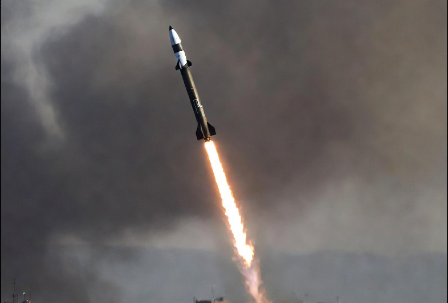
Military actions reportedly carried out under operations—OPIC Fury by the United States and Lion’s Roar launched by Israel—have intensified tensions with Iran. Missile strikes have reportedly caused significant casualties, raising serious concerns about human rights and regional stability. Reports indicate that around 150 children were martyred in an attack on a school in Tehran, the capital of Iran.
In response, Israel reportedly launched an operation named “Operation Fateh Khyber.” With every passing moment, the intensity of the war continues to increase, raising fears that prolonged escalation could lead to widespread destruction. It has also been reported that Ayatollah Ali Khamenei and other senior Iranian officials were martyred in missile strikes allegedly carried out by Israel and the United States. In such circumstances, emotions across the Muslim world have intensified.
Following the reported martyrdom of Ayatollah Ali Khamenei, a provisional council consisting of President Masoud Pezeshkian, Chief Justice Gholam-Hossein Mohseni-Eje’i, and Parliament Speaker Mohammad Bagher Ghalibaf was said to have been formed to manage state affairs until the appointment of a new Supreme Leader.
Meanwhile, tensions across the region have escalated further. Hezbollah in Lebanon reportedly launched missile attacks toward Israel, intensifying the crossfire. Iran’s reported closure of the Strait of Hormuz has raised global concern. The Strait of Hormuz is one of the world’s most critical maritime chokepoints, through which nearly 25% of global oil supplies pass daily.
Any disruption to this route, which connects the Persian Gulf to the Gulf of Oman, could sharply increase global oil prices, raise shipping insurance costs, and destabilize international trade.
The current situation highlights an important principle: unity is strength. When nations prioritize collective interests over personal or political gains and resolve disputes through dialogue, they strengthen their global standing and prevent destruction. The present scenario demands wisdom, diplomatic engagement, restraint, and mutual cooperation. Efforts by external powers to impose regime change in Iran are likely to prove unsuccessful.
The situation has also led to the formation of global blocs, with the European Union generally aligned with the United States and Israel, while China and Russia have shown diplomatic support for Iran. Several Gulf states have clarified their positions, and countries like Pakistan have expressed solidarity with Iran. Dividing the world into opposing blocs risks pushing humanity toward a broader global conflict. The inability of international institutions such as the United Nations to decisively prevent escalation raises concerns about the effectiveness of global peace mechanisms.
Ultimately, sustainable peace can only be achieved through unity, dialogue, justice, and responsible leadership rather than continued confrontation. The need of the hour for Muslim countries is to unite, as unity is strength .