
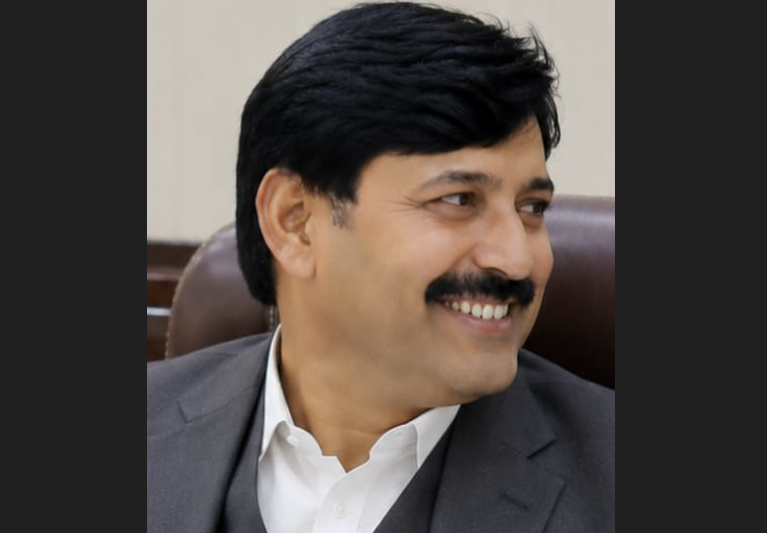
By: Malik Tariq Abbas
There is something profoundly stirring about the reopening of a school after a long vacation. The silent corridors once again await the cheerful clamour of children; empty classrooms anticipate the movement of young minds; whiteboards, smart boards, laboratories, libraries and playgrounds seem to regain their very purpose. A school is not merely a building of bricks and mortar—it is a living institution whose soul resides in its students and teachers. The return of children to school, therefore, deserves not a casual reception but a resounding welcome.
The history of public education in the subcontinent is long, complex and remarkable. Before the British period, the Indian subcontinent possessed indigenous institutions of learning, including maktabs, madrasas, pathshalas and other traditional centres of education. During British rule, however, a more formal, state-administered system of education gradually emerged. The Charter Act of 1813 marked an important milestone by allocating public funds for educational purposes. Later, Lord Macaulay’s celebrated Minute of 1835 gave a new direction to British educational policy. The most significant landmark came with Sir Charles Wood’s Education Despatch of 1854, issued on 19 July 1854. It proposed an articulated educational system extending from primary education to university level and recommended the establishment of Departments of Public Instruction, universities and a wider network of schools. It is consequently remembered as one of the foundational documents of modern education in British India.
Thereafter, the educational structure developed gradually and, in many respects, systematically. Schools passed through different stages of institutional development—from Lower Primary Schools to Upper Primary Schools, Middle Schools, High Schools and eventually Higher Secondary Schools. After independence, Pakistan inherited and subsequently expanded this educational framework according to its own social and national requirements. During the era of Prime Minister Muhammad Khan Junejo, the concept and development of higher secondary education received further attention, adding another important stage to the gradual expansion of public schooling.
Thus, the government school of today is not the creation of a single generation. It is the outcome of a long historical journey in which educational institutions have continuously evolved in response to the needs of society.
Yet schools have also experienced numerous interruptions and closures. Vacations are an essential component of an academic calendar. Summer vacations provide protection from the intense heat of the Punjab plains; winter vacations afford relief from severe cold; Easter holidays facilitate religious observance; while extraordinary closures have periodically become necessary because of epidemics, environmental hazards, security concerns and other exceptional circumstances.
The year 2020, in particular, occupies an extraordinary place in the history of education. The COVID-19 pandemic compelled schools to remain closed for a prolonged period and forced teachers, students and parents to confront an unprecedented educational challenge. Later, severe smog, extreme weather and other extraordinary circumstances also necessitated temporary closure or alteration of the academic calendar in Punjab. At different times, schools have also experienced special or extended vacations because of local circumstances, including emergencies associated with the local complex and other exceptional situations.
The precise dates and duration of these vacations have naturally varied from year to year according to official government notifications and prevailing circumstances. Nevertheless, whatever the cause, every prolonged closure eventually produces the same phenomenon: the school itself begins to be missed.
There is, indeed, a delightful paradox in the psychology of a school vacation.
When the vacation commences, students experience an almost indescribable sense of happiness. School bags are put aside, uniforms are hung away, alarm clocks are silenced and the morning routine suddenly disappears. Teachers, too, welcome the opportunity to rest, attend to domestic responsibilities, read, travel and recover from the demands of a long academic term. The commencement of a long vacation is, for both teachers and students, an occasion of genuine and praiseworthy happiness.
But as the weeks pass, the situation gradually changes.
Parents begin to tire of having their children at home throughout the day. The familiar parental expression begins to echo in countless households:
“Allah kare school open hon; aap log school jaen!”
What began as an eagerly awaited holiday eventually becomes a longing for the discipline, routine and purposeful engagement of school life.
Nor does a long vacation necessarily signify a vacation from learning. Conscientious teachers assign holiday homework, reading exercises, written practice and other academic tasks. Many teachers devote extraordinary time to their students even during long vacations. Some extend their services beyond the call of duty and provide free tuition to children requiring additional assistance. Private tuition and academies also continue to operate, while parents frequently make arrangements for supplementary learning.
Thus, the genuine teacher never truly ceases to teach merely because the school gate is closed.
The return to school, therefore, should mean the return of learning, not merely the return of students to school buildings.
Traditionally, however, an undesirable practice has sometimes accompanied the reopening of schools. During the first two or three days after a long vacation, student attendance often fell to around half of the normal strength. One practical reason was that students expected the opening days to be occupied principally with cleaning classrooms and school premises. Consequently, some of the more observant students preferred to remain at home, believing that there would be little academic activity during those preliminary days.
The unfortunate reality was that, in some cases, precious instructional time was indeed lost. Instead of commencing teaching and learning from the very first day, schools sometimes spent the initial days merely restoring their physical environment.
That old practice must now change.
The present initiative of the School Education Department, Government of Punjab, is therefore both timely and commendable. Preparations for the reopening of schools have been initiated well before the commencement of the academic routine. School authorities have been directed to ensure that schools are properly prepared to receive their students.
Across the district, school administrations are checking every essential aspect of reopening: cleanliness and sanitation, minor repairs and maintenance, availability of safe drinking water, electricity, furniture, whitewashing, school records, lesson planning and teacher diaries. Parents are being contacted and encouraged to prepare their children for their return to school.
The classrooms, too, are no longer what they were in former times. The old blackboard has increasingly given way to the whiteboard, while modern classrooms are being equipped with smart boards, ready to serve our students and facilitate contemporary methods of teaching and learning. The school laboratories, which have remained silent during the vacation, seem likewise to be awaiting the return of their young investigators. Their apparatus, charts and equipment are ready once again for science practicals, experiments, demonstrations and the joyful discovery of scientific facts.
A science laboratory without students is like a library without readers: perfectly equipped, yet deprived of its true purpose.
The playgrounds, too, have missed the footsteps of children. The library has missed the turning of pages. The whiteboard has missed the teacher’s handwriting. The smart board awaits the next lesson. The laboratory awaits the next experiment. And the classroom itself waits for the voices of its students.
This is why the reopening of a school is not merely an administrative event; it is a renewal of educational life.
Maryam Nawaz, Chief Minister of Punjab; Rana Sikandar Hayat Khan, Minister for School Education; and Mudasir Riaz Malik, Secretary, School Education Department, Government of Punjab, deserve our warmest applause for placing particular emphasis upon the preparation of schools before the return of students. By requiring district administrations and education authorities to ensure that schools are properly prepared, the government is conveying a powerful message of confidence, dignity and public service.
It is, in fact, a great gesture towards the people of Punjab. It tells parents that their government schools are not forgotten institutions. It tells teachers that their workplace deserves attention and respect. And, most importantly, it tells children that their education is a matter of genuine importance to the State.
The entire educational hierarchy has a role in this noble undertaking. CEOs, DEOs, Dy. DEOs, AEOs, head teachers, teachers and support staff are all partners in the collective mission of welcoming children back to school. Their duty is not merely to unlock the gates. They must open the doors of opportunity, knowledge and hope.
A clean classroom, a functioning fan, adequate furniture, safe drinking water, a prepared lesson, an updated teacher diary, an operational smart board and a functional science laboratory together create an environment in which a child feels valued.
Let the first day after vacation be a day of genuine teaching and learning.
Let no child hesitate to come to school because of dirt, disorder or unfinished preparations.
Let the old tradition of spending the first days merely cleaning schools become a thing of the past.
Let schools be cleaned before the students arrive, so that teaching may begin when the bell rings.
This campaign of preparation should not remain confined to the present reopening. It should become a permanent culture of preparedness. Every vacation should conclude with schools ready—not simply to receive children, but to educate them from the very first period of the very first day.
Let the reopening of government schools become a festival of learning.
Let the first morning be filled with clean classrooms, smiling teachers, prepared lessons, active laboratories, illuminated smart boards and eager children.
Above all, let every child returning after vacation receive the unmistakable message:
“Welcome back. Your school missed you. Your teacher is ready. Your classroom is ready. Your laboratory is ready. Your smart board is ready. And your future is waiting.”
Such a welcome would be far more than a ceremonial gesture. It would be a solemn reaffirmation of the government’s commitment to public education and a noble service to the people of Punjab.
If this spirit of preparation, supervision and welcome is maintained consistently in the years ahead, it can strengthen public confidence in government schools and restore them to their rightful place as the most accessible, dignified and trusted institutions of learning for the children of Punjab.